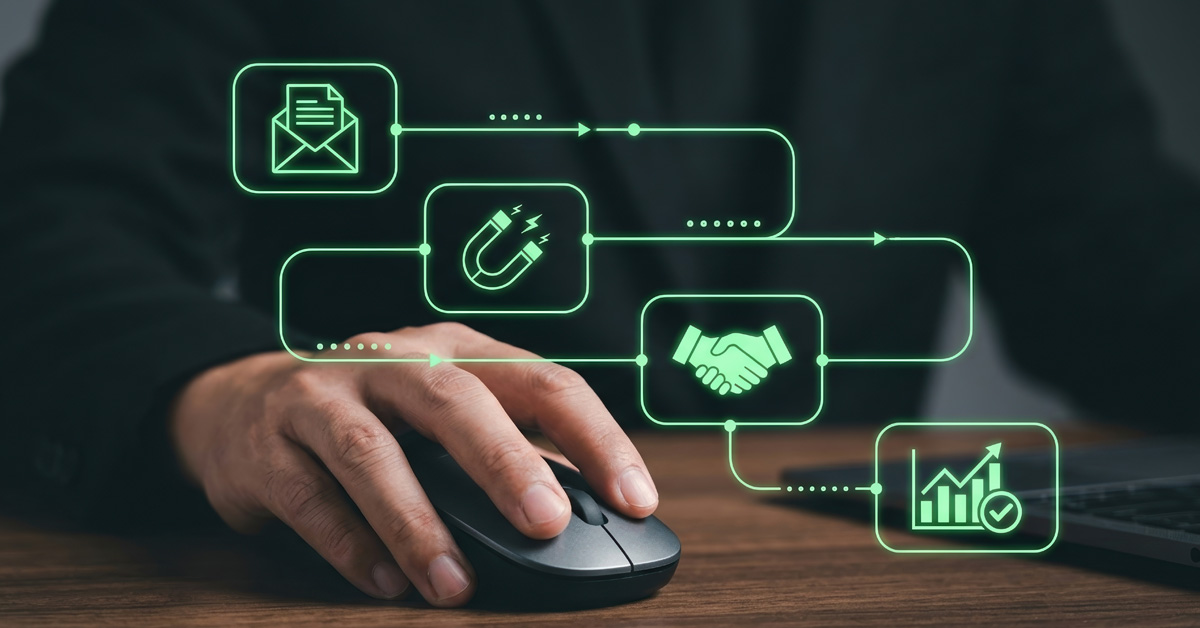
B2B lead generation is the process of identifying ideal potential buyers for your product or service and enticing them to purchase. It sits at the intersection of marketing and sales, using targeted tactics to attract interest from organisations that fit your ideal customer profile (ICP) and guiding those prospects into the sales funnel. Because future revenue depends on consistently generating interest from the right sources, B2B lead generation is a foundational business function-one that requires strategy, alignment, measurement, and ongoing refinement.
Why B2B Lead Generation Matters
- Quality over quantity: In B2B markets, sales cycles are longer, and deals are larger. Generating large volumes of poorly qualified leads wastes time and resources. The goal is to attract decision-makers and influencers whose needs align with your solution.
- Pipeline health: A steady flow of qualified leads fuels predictable pipeline and revenue forecasting. Without reliable lead generation, growth stalls.
- Competitive advantage: Companies that refine their lead generation processes-targeting, messaging, channels, and qualification-win more deals and scale more efficiently.
Core Elements of Effective B2B Lead Generation
- Define the Ideal Customer Profile (ICP) and Buyer Personas
- ICP: Identify the types of companies (industry, size, revenue, geography, tech stack) that benefit most from your offering.
- Buyer personas: Map the specific roles (CFO, IT manager, procurement) and their motivations, pain points, and buying criteria.
A clear ICP and personas focus outreach and content, increasing conversion rates.
- Craft Compelling Value Propositions and Messaging
- Communicate outcomes: B2B buyers care about measurable outcomes-cost savings, productivity, compliance, revenue uplift. Messages should connect features to business impact.
- Address objections: Anticipate procurement concerns (ROI, implementation time, security) and answer them early.
- Use a Mix of Inbound and Outbound Tactics
- Inbound: Content marketing (white papers, case studies, blogs), SEO, webinars, gated resources, and social media attract prospects who are researching solutions. Inbound generates interest with lower acquisition costs over time.
- Outbound: Targeted email campaigns, LinkedIn outreach, account-based marketing (ABM), cold calling, and direct mail enable proactive engagement with high-value accounts. Outbound is effective for enterprise deals and highly specific targets.
- Events and partnerships: Trade shows, industry conferences, and channel partnerships connect you with qualified audiences and referral sources.
- Capture and Qualify Leads
- Capture mechanisms: Landing pages, forms, chatbots, demo requests, and newsletter signups convert visitors into leads. Optimize for conversion with clear CTAs and frictionless forms.
- Lead qualification: Use lead scoring and qualification frameworks (like BANT or MEDDIC) to prioritize leads based on fit and engagement. Distinguish Marketing Qualified Leads (MQLs) from Sales Qualified Leads (SQLs) to streamline handoffs.
- Nurture and Accelerate the Buyer Journey
- Multi-touch sequences: Use email workflows, retargeting ads, personalized content, and sales outreach to move prospects from awareness to consideration and decision.
- Personalization: Tailor messages to industry, role, and behavior. ABM tactics-custom content and outreach for target accounts-drive higher engagement with top opportunities.
- Measure, Analyze, and Iterate
- Key metrics: Track conversion rates across funnel stages, MQL-to-SQL conversion, cost per lead (CPL), customer acquisition cost (CAC), lifetime value (LTV), and pipeline velocity.
- Attribution: Understand which channels and pieces of content drive pipeline. Use multi-touch attribution models where possible.
- Continuous optimization: A/B test headlines, CTAs, email subject lines, and landing page layouts. Refine targeting and spend allocation based on performance.
Technology and Tools
- CRM (e.g., Salesforce, HubSpot): Centralises contact, account, and pipeline data.
- Marketing automation (e.g., Marketo, HubSpot, Pardot): Powers email nurturing, lead scoring, and campaign workflows.
- Analytics and BI tools: Provide insights into funnel performance and ROI.
- Sales engagement platforms (e.g., Outreach, SalesLoft) and intent data providers help scale outbound and prioritise accounts.
Common Challenges and How to Overcome Them
- Misalignment between sales and marketing: Establish shared definitions (what is an MQL?), SLAs for follow-up, and joint KPIs to ensure leads are processed efficiently.
- Data quality: Keep CRM clean-remove duplicates, enrich profiles, and verify contact data regularly.
- Long sales cycles: Focus on nurturing and education, maintain consistent touchpoints, and track engagement to identify hot leads.
- Measuring impact: Invest in proper attribution and integrate systems so marketing influence on deals is visible.
Best Practices
- Start with a clear ICP and test hypotheses with small campaigns before scaling.
- Prioritise high-intent channels for different stages of the funnel-SEO and content for awareness, webinars and demos for consideration, one-to-one outreach for closing enterprise deals.
- Use account-based approaches for high-value prospects while maintaining scalable inbound funnels for broader demand generation.
- Keep messaging outcome-focused and case-study-driven to demonstrate real-world value.
- Foster feedback loops: sales should report back on lead quality; marketing should adapt campaigns accordingly.